
From Manual to Automatic: Why Your Business Needs Vehicle Maintenance Software in 2026
In 2026, fleet operations have become more complex, competitive, and cost-sensitive. Rising fuel prices, unexpected breakdowns, and inefficient tracking have made manual systems outdated. Businesses that want to stay profitable are rapidly shifting toward vehicle maintenance software and fleet management software to gain control and visibility.
If you’re still managing your vehicles using spreadsheets, paper logs, or scattered messages, there’s a bigger question to ask: are you running your fleet on data; or on guesswork?
In 2026, fleet operations have become more complex, competitive, and cost-sensitive. Rising fuel prices, unexpected breakdowns, and inefficient tracking have made manual systems outdated. Businesses that want to stay profitable are rapidly shifting toward vehicle maintenance software and fleet management software to gain control and visibility.
The Hidden Costs of Manual Fleet Management
Manual processes may seem manageable at first, but they often create silent inefficiencies that grow over time:
Missed preventative maintenance schedules
Incomplete or inaccurate fleet maintenance logs
Fuel misuse due to lack of a proper fuel management system
Delays caused by poor work order management
No clear insight into vehicle lifecycle management
The result? Higher downtime, unexpected repair costs, and reduced operational efficiency.
What’s Different in 2026? Automation + Intelligence
Modern fleet management software goes far beyond basic tracking. It provides real-time insights, predictive alerts, and automation that helps businesses move from reactive problem-solving to proactive decision-making.
The Shift:
Manual tracking → Real-time fleet tracking software
Reactive repairs → Automated preventative maintenance schedules
Assumptions → Data-backed decisions
Why Vehicle Maintenance Software Is Essential Today
1. Prevent Breakdowns Before They Happen
Instead of waiting for a vehicle to fail, automated systems track usage data like mileage and engine hours.
This enables:
Timely service reminders
Reduced unexpected failures
Longer vehicle lifespan
2. Centralized Digital Maintenance Logs
Say goodbye to scattered spreadsheets. With digital systems:
All fleet maintenance logs are stored in one place
Complete vehicle lifecycle management becomes accessible
Service history is available instantly
This not only improves efficiency but also increases resale value and simplifies audits.
3. Faster, Smarter Inspections with DVIR
Paper-based inspections are slow and unreliable.
With electronic inspections (DVIR):
Drivers submit reports digitally
Issues are flagged in real time
Compliance becomes easier to maintain
4. Control Fuel Costs Effectively
Fuel is one of the largest operational expenses for any fleet.
A reliable fuel management system helps:
Monitor fuel consumption per vehicle
Detect inefficiencies or misuse
Optimize routes and usage patterns
5. Streamline Operations with Work Orders
Managing repairs manually often leads to delays and confusion.
With work order management:
Tasks are assigned instantly
Progress is tracked in real time
Maintenance workflows become structured and efficient
6. Avoid Delays with Parts and Inventory Tracking
Maintenance delays often happen because required parts aren’t available.
Using parts and inventory tracking:
You get real-time stock visibility
Automated alerts for low inventory
Reduced downtime due to better planning
7. Manage More Than Just Vehicles
Modern operations often include equipment, tools, and machinery.
That’s where asset management software becomes critical:
Track usage and condition of assets
Schedule maintenance for equipment
Reduce losses and improve utilization
Understanding Total Cost of Ownership (TCO)
Many businesses focus only on the upfront cost of vehicles, but the real expense includes:
Fuel
Maintenance
Repairs
Downtime
A Total Cost of Ownership (TCO) calculator gives a complete picture of how much each vehicle truly costs over time.
This insight allows businesses to make smarter financial and operational decisions.
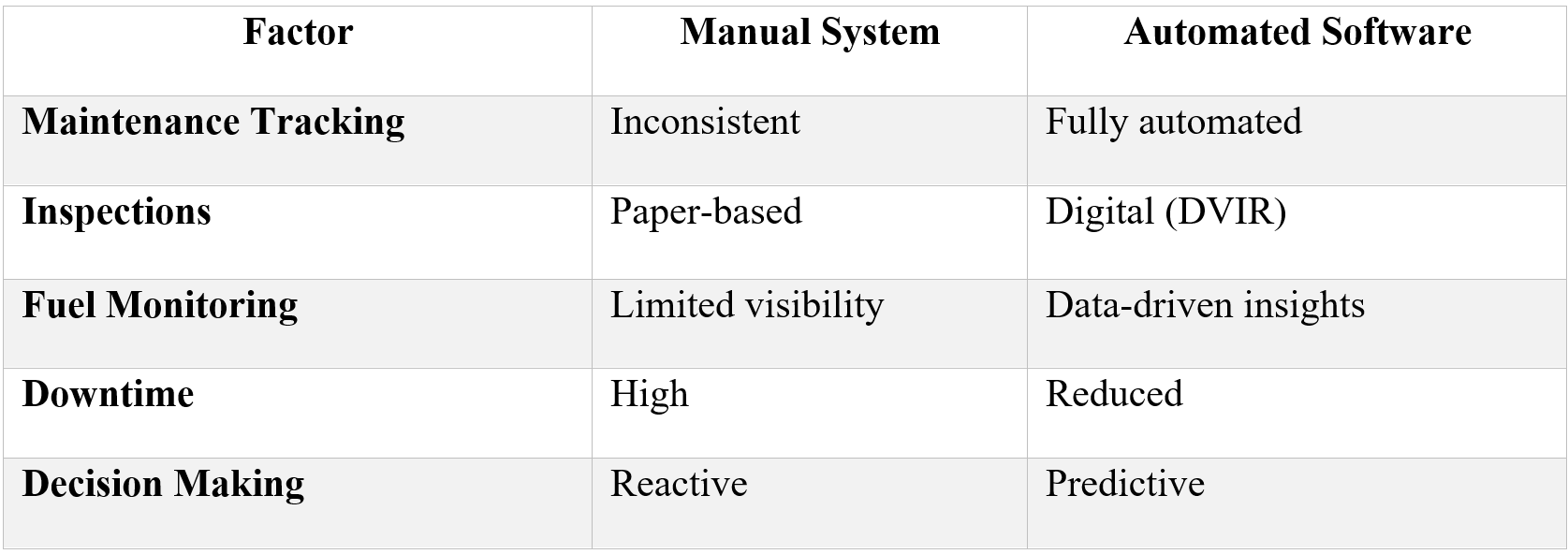
Manual vs Automated Systems: A Clear Difference
Fleet Management Trends in 2026
The future of fleet operations is driven by technology. Key trends include:
AI-powered fleet management software
Predictive maintenance systems
Advanced fleet tracking software with real-time analytics
Mobile-first inspection tools
Fully integrated operational platforms
Businesses that adopt these technologies gain a significant competitive advantage.
Final Thoughts: It’s About Control, Not Just Software
Vehicle maintenance software is more than a tool, it’s a system that gives you complete control over your operations.
It helps you:
Reduce costs
Improve efficiency
Scale your business with confidence
In 2026, the question is no longer whether you need automation.
The real question is: how much longer can your business afford to operate without it?
More from Fleetmatic
View all articles